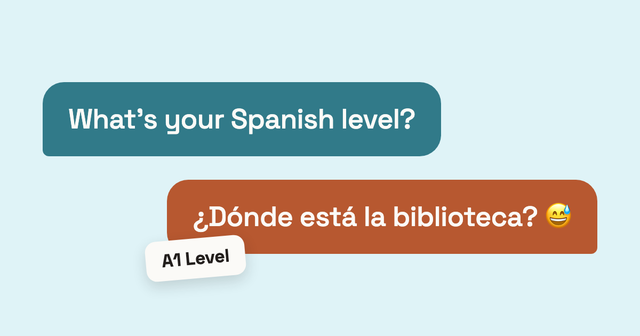
You have spent years learning Spanish. You read it fine, you follow films, sometimes even without subtitles. But the moment a real person asks you a question, your mind goes blank and you answer “sí” while quietly praying the conversation ends there. Good news: this is not about your level. It is about practice, and speaking is something you can practise, for free.
Why understanding Spanish is not enough
Understanding a language and speaking it are two different skills, and they live in two different places in your brain. You can hold thousands of words in memory and still be unable to pull them out fast enough to keep a conversation going.
The reason is simple. At school, in apps, in textbooks, you spend most of your time listening, reading and filling in exercises. You speak a few minutes an hour, at best. It should be the other way around: speaking is a reflex, and a reflex is built by repeating it, not by reading about it. The rule that follows fits in one line: to speak, you have to speak. Everything else is useful on the side. If you understand everything but cannot get the words out, we go into why you can't speak Spanish separately.
6 ways to practise speaking Spanish for free
Here they are, from the easiest to do alone tonight to the most effective for real progress. Do not try all of them: pick two or three and stick with them.
1. Talk out loud, on your own
It sounds silly, but it is the foundation. Nobody is listening, so you are not afraid of getting it wrong, and getting it wrong with no consequences is exactly what loosens your tongue. To make it count, give yourself a topic and a constraint: describe yesterday in the past tense for two minutes without stopping, then describe tomorrow in the future tense. The next day, switch topics.
Once a week, record yourself on your phone and listen back. It is uncomfortable for thirty seconds, then very useful: you spot in one go the words you are missing and the sentences where you stumble. Those are exactly the ones to go and learn. Five minutes a day, and you feel the difference in two weeks.
2. Shadowing: repeat right after a native speaker
Shadowing means listening to a sentence in Spanish and repeating it straight away, copying the rhythm and the intonation, like a shadow. In practice: take a short, clear clip. A “Notes in Spanish” episode, a subtitled YouTube video, a scene from a series, a slow Spanish podcast. Listen to one sentence, pause, repeat it out loud while sticking to the music of the voice, then do it three or four times before moving on to the next one.
Start slow, do not try to say it all at once. It trains your mouth to form Spanish sounds and your ear to recognise them at the same time. Ten minutes a day, and your accent starts to shift within a few weeks.
3. Find a language exchange partner
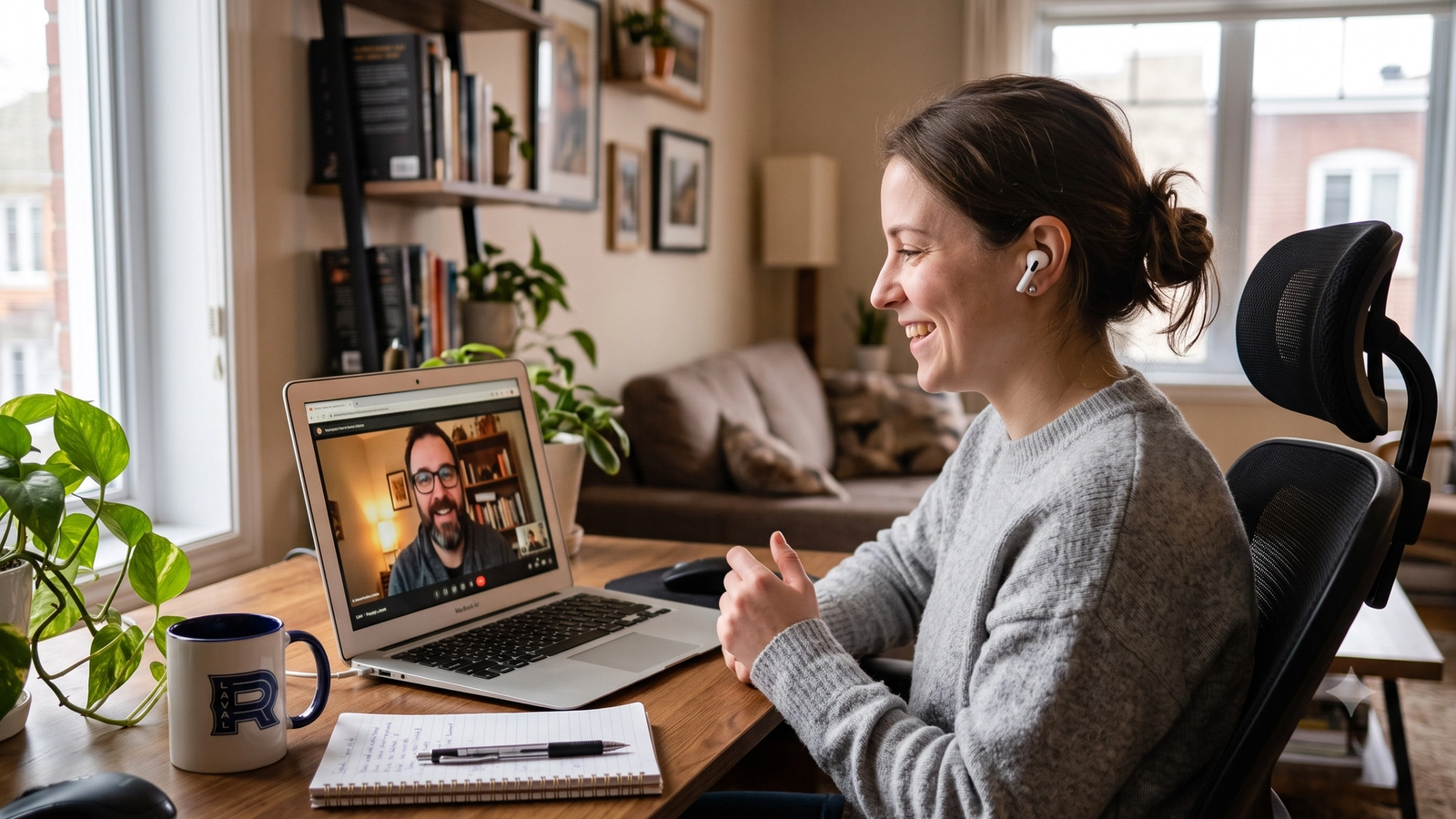
This is by far the most effective method, because it is the only one where you speak with a real person who answers you, corrects you and pushes you to improvise. The idea: you find someone whose native language is Spanish and who is learning English. You spend half the time in each language. You each correct the other, and nobody pays a thing.
On paper it is perfect. In real life the problem is always the same: finding the right person, and above all one who is there to talk. On most exchange apps you spend more time writing messages than speaking; plenty of people reply three times then vanish, or stay glued to the keyboard. You wanted to speak, and you end up typing.
That is exactly what PalVivo fixes: we match you with someone who is learning your language and speaks the one you want to practise, and you meet on a weekly video call. No wall of messages, no people who evaporate, just a short, regular appointment with one clear goal: talking. It is free, and built so the conversation actually happens, every week.
4. Join an online conversation group
There are dozens of communities that meet up to speak Spanish for free: language Discord servers, Meetup groups in your city, the r/language_exchange subreddit, learner voice rooms. The upside: you hear other learners, which takes the drama out of your own mistakes. The downside: in a group, your speaking time shrinks, you listen a lot and speak little. A good supplement, rarely the main course. To compare the formats before you commit, language exchange café, workshop, online group or app, we go through them one by one in our guide to Spanish conversation groups.
5. Talk to an artificial intelligence
AI conversation apps and the voice modes of assistants like ChatGPT let you speak with zero embarrassment, at any hour, on any topic. It is perfect for warming up before a real call, for rehearsing a specific situation such as a job interview or ordering at a restaurant, or for daring to say your first sentences. The catch: an AI does not really react like a human, does not know you, and deep down you know it is not “for real”. That removes the small bit of pressure that is precisely what makes you improve. And if what is coming up is a job interview in Spanish, the questions that keep coming back and how to answer them are here.
6. Build yourself a Spanish bubble
Switch your phone to Spanish, listen to Spanish podcasts while you walk, watch your series in the original version, think in Spanish when you can. It does not replace speaking, but it feeds your ear and your vocabulary, so that on the day you do speak, the words come faster.
Your plan to start this week
Six methods is too many to start with. Here is a simple week, fifteen to twenty minutes a day, that combines them without drowning you:
- Monday, Wednesday, Friday: five minutes talking out loud to yourself (method 1), then five minutes of shadowing (method 2).
- One day in the week: a conversation with a native partner (method 3). This is the appointment that matters most, so block it in your calendar like a real one.
- In the background, no effort: your Spanish bubble (method 6), while walking or doing the dishes.
Keep the AI (method 5) for warming up on the days the call makes you nervous, and there you have a complete routine that costs nothing.
Which one to keep if you only keep one
If you really want to speak with ease, only one of these methods ticks every box: speaking regularly with a native partner. The others are excellent supplements, shadowing for the accent, the Spanish bubble for vocabulary, AI for daring, but none of them replaces a real conversation, with a real human, that comes back every week.
The secret is not the perfect method. It is regularity. Twenty minutes every week, always, beats three hours one Sunday and then nothing for a month.
How long before you see results
With regular speaking practice, most people feel a real click within two to three months: sentences come without having to translate them in your head first. It is not about talent, it is about repetitions. The more you speak, the faster it comes, and the first step is simply to start speaking today, even badly.