You read Spanish and you understand it, but you never get the chance to speak it. Joining a conversation group is the most effective fix there is. What's left is picking the right format for you.
There's no shortage of options: workshops in person, language exchange cafés, conversation tables, online groups, apps. Each one has its strengths and its limits. Here they are, side by side, so you can decide.
Want to speak tonight, without depending on a place or a timetable? An app like PalVivo puts you on a video call with a partner, for free.
Find a conversation partner for free
Why a group changes everything for speaking
Speaking Spanish in your head doesn't train you to speak it for real. A group forces you to react live, to listen, to jump in. That's where ease gets built.
On your own, you dodge the words that trip you up. In a group you have to face them, with room to get it wrong. Every exchange feeds your confidence.
A regular group also builds a habit. You stop practising in bursts and start practising every week. That consistency is what makes the difference over time.
That said, a group works best alongside other ways to practise speaking Spanish. The more chances you give yourself, the faster you improve.
Where to find a Spanish conversation group
Four main options exist, from the most local to the most flexible. Each time, look at real speaking time and at the cost.
1. Conversation workshops
Run by community centres, libraries or language schools, they give you a structure and someone leading it. Groups are split by level and the mood is serious. In exchange, you pay, and the time is fixed. If you have no idea which one they would put you in, two minutes of speaking is enough to place your Spanish on the A1 to C2 scale.
2. Language exchange cafés and conversation tables
At a language exchange café, a conversation table or a meetup, you talk over a drink, free or nearly. The mood is friendly and relaxed. On the other hand, levels are all over the place, and you say little if the group is big.
3. Online groups (Discord, Facebook, forums)
Free and reachable from anywhere, these groups run to thousands of members. But most of what happens in them happens in writing. For your speaking, the payoff stays small. To compare all the options, we went through the ways to hold a Spanish conversation online.
4. Conversation and exchange apps
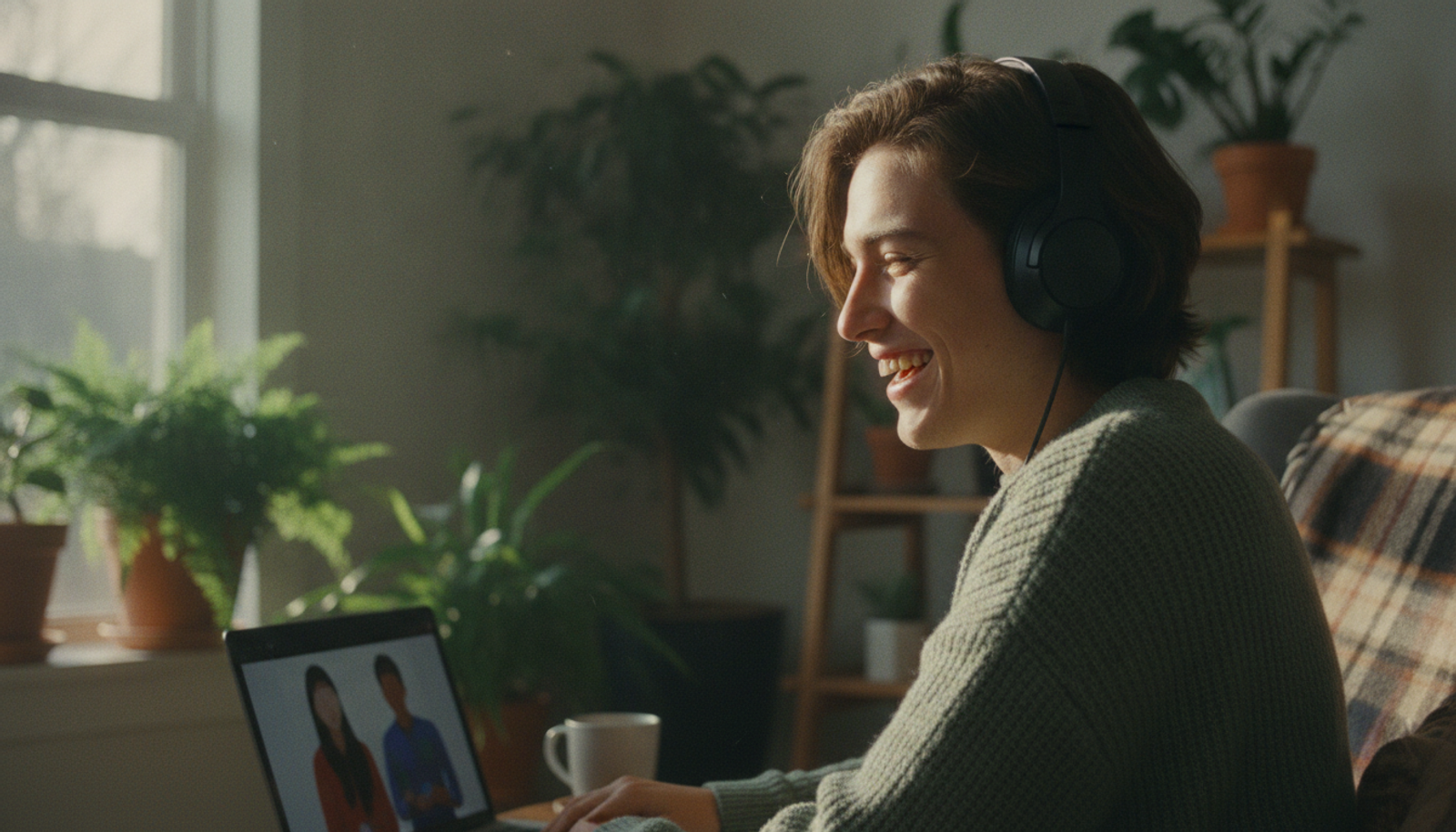
They connect you with partners to speak, on demand. No waiting for Tuesday evening, no need to live in a big city. You speak when you want, from where you want.
That's exactly what PalVivo does. The app matches you with a partner every week, on a video call, with an even split of speaking time in each language. It's free and reciprocal, with no messaging to pull you off track.
Speak on a video call with a partner today
How to pick the group that suits you
The right choice depends on your city, your budget and the time you have. Ask yourself three questions before you sign up.
- Is there anything near you? In person, it all depends on where you live; online, the question disappears.
- What budget? Language exchange cafés and apps are free on one side, workshops and taught classes are paid on the other.
- How much speaking time? In a small group or one to one, you speak far more than in a big group.
What a Spanish conversation group costs
Prices run from nothing at all to a few dozen dollars a session. It all depends on the format you pick.
- Language exchange cafés and meetups: often free, sometimes the price of a coffee.
- Workshops and group classes: budget the equivalent of US$10 to US$35 a session, depending on the school.
- Conversation apps: plenty are free, like PalVivo; others run on a subscription.
Price isn't everything. An expensive class where you sit and listen is worth less than a free exchange where you talk non-stop.
Ready to actually speak?
You now know every option for joining a conversation group. The best one is the one where you speak the most, most often. Pick one and start this week. And if you have a real deadline, a job interview in Spanish for instance, being regular is what makes the difference on the day.