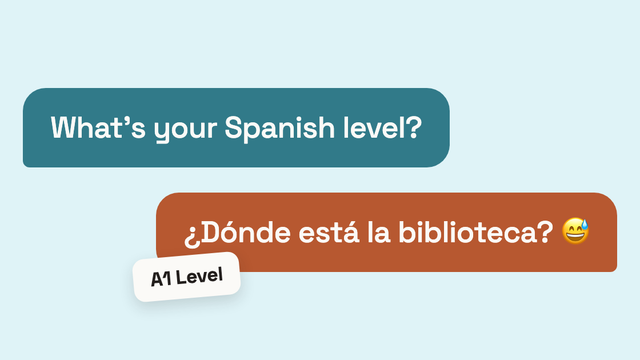
Your grammar is solid and you follow Spanish series without subtitles. But the moment an interviewer switches to Spanish, your mind goes blank. The problem isn't your level. It's that you've never had to speak Spanish under pressure, facing someone who decides your career.
Good news: an interview in Spanish always follows the same script. The questions circle around you, your background and what you want. Three subjects you know by heart.
The surest way not to freeze in front of the interviewer? Already being in the habit of speaking Spanish out loud, with someone, long before the interview. That's what PalVivo gives you: regular video calls with a partner, free and with no credit card.
Speak Spanish with a partner, for free
Why an interview in Spanish is so frightening
Look at what happens in your head during the interview. You listen to the question, you translate it into English, you look for your answer. Then you translate it back into Spanish and you say it. Five steps where a native speaker has one.
The result: a blank, a few filler sounds, the feeling of wrestling with words when you have the skills. That gap has nothing to do with your vocabulary. What really holds you back is your reaction time under stress.
Revising a list of phrases doesn't train that reflex. Reading in silence and answering live are two different exercises. It's like learning to swim from a manual.
The fix comes down to one habit: putting yourself in front of the spoken language, often. The more time you spend practising speaking Spanish, the more automatic that reflex becomes.
The standard questions, and how to answer them
These questions come up in almost every interview in Spanish. For each one, aim for a clear outline and two or three sentences to lean on. Not a text learned by heart.
1. “Háblame de ti”
It's the opening question, near enough guaranteed. The interviewer doesn't want your life story. They're after a two-minute summary: who you are, what you do, what you're looking for.
Structure your answer in three beats: present, background, plan. A structure that works: “Soy [job title] con X años de experiencia. Ahora mismo trabajo en [project]. Estoy buscando [goal].” Don't translate word for word: go for the message, not the perfect sentence.
2. “¿Por qué quieres trabajar aquí?”
The interviewer is testing two things: how prepared you are and how well you know the company. Skip the catch-all “porque es una gran empresa”. Tie one concrete thing about the company to what you want to do.
Something to lean on: “Sigo [product or value] desde hace tiempo, y encaja con lo que quiero construir ahora.” One sentence is enough, as long as it's specific.
3. “¿Cuáles son tus puntos fuertes?”
Pick two strengths at most, and back each one with an example. A quality claimed without proof convinces nobody. The pattern that works: the strength, then a short situation that shows it.
For example: “Se me da bien [quality]. Por ejemplo, en mi último puesto [result].” That “por ejemplo” forces you into the concrete and gives you room to breathe.
4. “¿Cuál es tu mayor debilidad?”
The classic trap question. The mistake isn't having a flaw. It's lying with a fake flaw dressed up as a quality.
Name a real difficulty, then show how you handle it. For example: “Antes me costaba [X]. Lo estoy trabajando con [action].” You prove both self-awareness and the ability to improve.
5. “¿Dónde te ves en cinco años?”
Nobody expects a mapped-out career. The interviewer wants a direction, and one that fits the job. Stay honest and stay open.
Something like: “Quiero seguir creciendo en [field] y asumir más responsabilidad. Este puesto es un buen paso en esa dirección.” You link your future to the job without promising the impossible.
6. “¿Tienes alguna pregunta para nosotros?”
Never answer “no”. It's your one chance to show interest and take back the wheel. Prepare two questions in advance.
For example: “¿Cómo sería el éxito en los tres primeros meses?” or “¿Cómo está organizado el equipo?” One good question lands harder than ten answers.
The Spanish interview vocabulary to have ready
A handful of building blocks come up in every interview. Having them as a reflex saves you hunting for words at the worst possible moment.
- Buying yourself a second: “Buena pregunta, déjame pensarlo un momento…”. One transition beats a dozen filler sounds.
- Asking for it again: “Perdone, ¿podría repetir la pregunta?”. Asking for something to be said again reads as confidence.
- Talking about your experience: “Me encargo de…”, “Era responsable de…”, “Dirigí un proyecto que…”.
- Staying polite and professional: “Gracias por recibirme”, “Agradezco mucho la oportunidad”.
- Tú or usted: Spain usually goes straight to tú; much of Latin America opens with usted. The questions are the same either way, so follow whatever the interviewer uses.
- The right word: a job interview is una entrevista de trabajo (also entrevista laboral); the person across the table is el reclutador or la reclutadora.
Don't try to memorise all of it. Pick five or six phrases that steady you, and say them out loud until they come naturally. The same logic holds outside the interview: a few phrases for speaking Spanish are enough to keep the silences away.
The real preparation: speaking Spanish before the interview
Be honest with yourself. You can reread this guide ten times and download every PDF on the web. You'll still freeze in front of the interviewer, because none of it makes you speak.
That's the blind spot in classic preparation. We revise with our eyes an exercise that gets played with the mouth. What actually works is speaking, often, to someone.
The hard part is finding someone to speak to. Private lessons cost a lot for a few hours of conversation. And your Spanish-speaking friends aren't always free. A Spanish conversation group is one route, though with eight people around a table you speak five minutes in an hour.
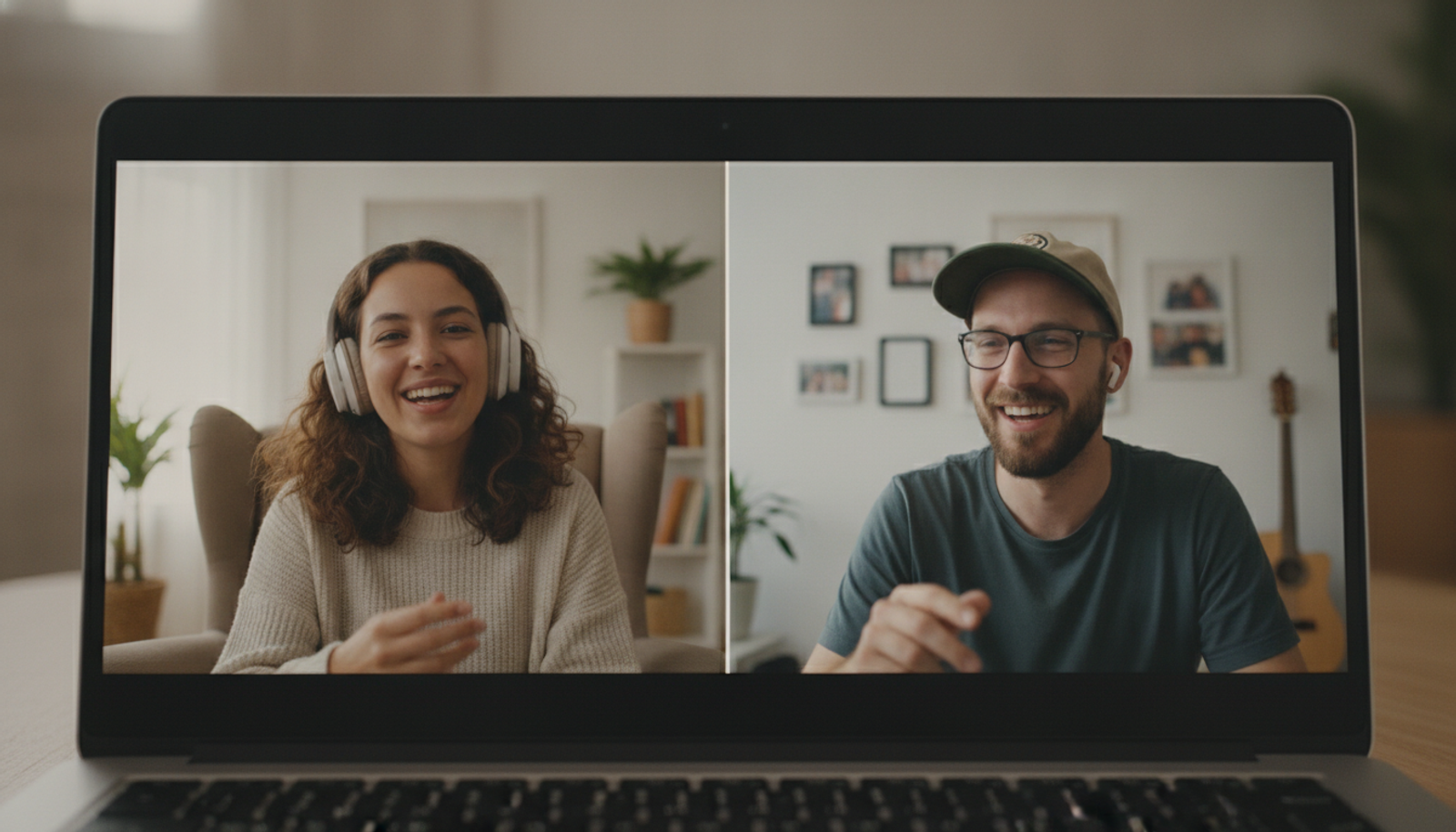
That's exactly the gap PalVivo fills. The app puts you on a video call with someone who's learning your language and speaks the one you want to practise, once or twice a week, with no messaging and no subscription. It's where you get at ease speaking, so that Spanish stops being the obstacle on the day.
It's free and reciprocal: half the call happens in your language, half in theirs. What you get out of it is the thing that counts: answering without translating in your head.
Get at ease speaking, for free
Your plan for the last few days before the interview
You don't need a month. One week used well changes how at ease you are.
- A week before: write your outlines for the six questions, in your own words. Pull the vocabulary of the role straight out of the job ad.
- Three days before: say your answers out loud, alone and then with a friend playing the interviewer. Aim for flow, not perfection.
- The day before: one last full run-through, then put your notes away. Over-revising feeds the stress.
- On the day: arrive early and breathe. A slight accent costs you nothing; a panicked silence does.
Ready to stop freezing in front of the interviewer?
You have the questions, the outlines and the vocabulary. One step is left, and it's the one that makes the difference: speaking. Say your answers out loud, and get into the habit of speaking Spanish every week: the ease will already be there on the day.