No, Duolingo is not enough to speak Spanish. But it is excellent at what it does: installing the foundations painlessly, a few minutes a day.
The distinction matters. The app teaches you to recognise the language, not to produce it. You finish the course able to read simple sentences, and you freeze the moment a Spanish speaker turns to you.
Speak Spanish with a native, for free
Is Duolingo enough to learn Spanish? The short answer
For the foundations, yes. For speaking, no. Duolingo installs the vocabulary and the everyday turns of phrase, at a pace you can keep without forcing it.
What it does not do is put you in a situation. In the free version and in Super, no exercise asks you to answer someone in real time, without the choices on screen. Duolingo Max, the most expensive tier, does add a spoken conversation with an AI character: a model that always understands you, always articulates, and never changes accent.
The same report keeps coming back from people who finished the course: they understand a lot and they speak little. That is not a flaw in the app, it is its nature.
The simple test: close the app and describe your day in Spanish, out loud, for one minute. If the words come, Duolingo did its job. If you stall on the second sentence, you have found what is missing.
What Duolingo actually teaches you
Three things, and it does them well: vocabulary, basic sentence patterns and a daily habit.
Vocabulary arrives in small doses, repeated until it sticks. Patterns settle by imitation. You see "quiero un café" a hundred times, and eventually it comes out without thinking.
The habit is its real strength. The streak, the reminders, the rewards: everything is built to bring you back. A few minutes a day for six months adds up.
Pronunciation exercises exist, but the app only validates a sentence repeated after a model. It measures neither your pace nor your ability to keep going.
One thing did change in April 2026: the nine main courses, Spanish included, now run up to B2 instead of stopping at A2. That raises the ceiling on what you read and recognise. It does not add anyone for you to talk to.
What level do you reach with Duolingo in Spanish?
A decent level of comprehension, and a much lower level of expression. The two do not progress together.
Duolingo measures what you recognise: you pick the right answer among options, you put words back in order. Nothing measures what you produce unaided.
Hence the sense of plateauing: the scores go up, the speaking does not follow. It is not you stalling, it is a tool that only measures half the language. The half it leaves out is the one that decides your level, and what each Spanish level sounds like out loud is where that difference becomes obvious.
To measure what you actually produce, take the Spanish level test. You answer out loud and you get your level on the European scale, A1 to C2, in under two minutes. You will see the gap between what you understand and what you say.
The four limits of Duolingo for speaking Spanish
None of these is a bug. They are the edges of the tool, and knowing them saves you six months of false progress.

1. Recognising is not producing
Picking the right translation from a list, or finding the word on your own in front of a person: two unrelated exercises. Duolingo trains the first reflex, almost never the second.
2. Sentences nobody says
A sentence like "the cat drinks milk in the kitchen" teaches you a structure, not a conversation. Real exchanges are full of hesitations, shortcuts and accents, none of which appear in the exercises.
3. No unexpected question
Every exercise has an expected answer. In life, the other person picks up on what you just said. They ask the question you had not prepared. That is where you freeze, and that is where you improve.
4. Nobody answers you
The app corrects your sentence, it does not reply to it. But speaking is holding an exchange: understanding, reacting, keeping it going. That loop is only trained with a human.
Where do you start speaking? With a hundred words and one call a week. You can speak Spanish from the first weeks, without waiting for the end of the course.
Find a Spanish speaker to practise with
Is Duolingo really free?
Yes, the free version gives access to the whole Spanish course. It shows ads between lessons and caps how many questions you get through in a day: on mobile, every answer spends Energy, right or wrong.
Super Duolingo, the paid tier, removes the ads and that daily cap, and adds practice tools around the lessons. What it does not change is the method: the lessons themselves are identical, you just get through them more comfortably.
One detail matters for a beginner: that counter pushes you to move fast rather than take the time to try. Out loud, you need the opposite: dare, get it wrong, go again.
For the foundations, the free version is enough. Keep your budget for what the app does not do: speaking. If you understand everything and still cannot get a word out, that has its own causes: why you can't speak Spanish.
How to use Duolingo and actually progress
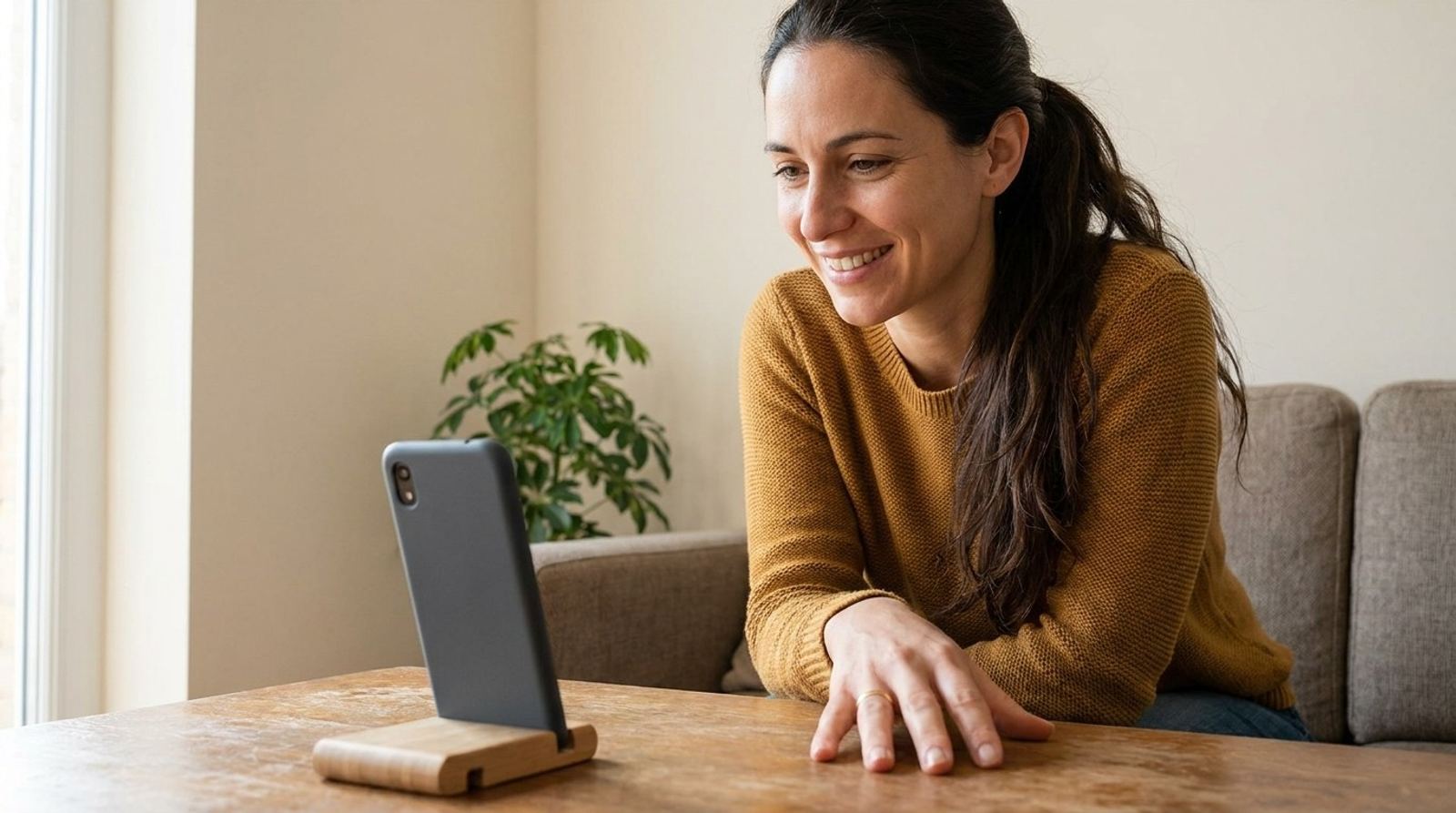
Keep Duolingo, and add what it is missing. The app and spoken practice are not competitors: one feeds the other.
Three adjustments make the difference. Say every sentence out loud instead of typing it. Do not go past fifteen minutes, beyond that you are stacking without retaining. And book a weekly call with someone who speaks Spanish.
An order that works: the lesson in the morning, then the same sentences said out loud during the day. The weekly call is where you use them for real.
That is where PalVivo takes over. It finds you a Spanish speaker who is learning your language, and you meet on a weekly video call. They will ask you the question Duolingo never will.
For where to find that person, we compare the best language exchange apps one by one.
Duolingo gave you the words, now say them
You have the vocabulary and the habit. What is left is the half the app cannot cover: practising Spanish out loud with somebody who answers back.