Learning how to introduce yourself in Spanish comes down to four facts: your name, where you're from, what you do and what you like. Everything else is a bonus.
The part that actually matters comes right after: answering, then asking something back. That's the moment most beginners freeze.
Your first Spanish introduction, free
How to introduce yourself in Spanish: the 30-second template
Here is a complete self introduction in Spanish that you can make your own by changing three words. It works everywhere: a first call, a message to a language partner, meeting someone on a trip.
- ¡Hola! Me llamo Emily. : Hi! My name is Emily.
- Tengo 32 años y soy estadounidense. : I'm 32 and I'm American.
- Vivo en Denver, pero soy de Chicago. : I live in Denver, but I'm from Chicago.
- Trabajo como enfermera. : I work as a nurse.
- Llevo tres meses aprendiendo español. : I've been learning Spanish for three months.
- Me gusta viajar y cocinar. : I like travelling and cooking.
- ¿Y tú? ¿De dónde eres? : And you? Where are you from?
Seven sentences, no subordinate clauses, no tricky tenses. Say it out loud twice and it's yours.
20 phrases to introduce yourself in Spanish
Pick what fits the moment. The phrases go from the most common to the most personal: greetings, name, origin, work, languages, hobbies and family.
- Buenos días / Buenas tardes : Good morning / Good afternoon
- Encantado de conocerte (encantada if you're a woman) : Nice to meet you
- Mucho gusto : Pleased to meet you
- Me llamo… : My name is…
- Mi nombre es… : My name is… (a touch more formal)
- ¿Cómo te llamas? : What's your name?
- Tengo veinticinco años : I'm twenty-five
- Soy de Estados Unidos : I'm from the United States
- Soy británico (británica) / canadiense / australiano (australiana) : I'm British / Canadian / Australian
- Vivo en… : I live in…
- Trabajo en una empresa de… : I work for a … company
- Soy estudiante de… : I'm a … student
- Estoy jubilado (jubilada) : I'm retired
- Estoy aprendiendo español : I'm learning Spanish
- Hablo inglés y un poco de francés : I speak English and a little French
- Todavía no hablo muy bien : I don't speak very well yet
- Me gustan el cine y la música : I like films and music
- En mi tiempo libre, hago deporte : In my free time, I do sport
- Tengo dos hijos : I have two children
- Estoy casado (casada) / soy soltero (soltera) : I'm married / single

Once the conversation gets going, you'll also want a way to ask someone to repeat or to find a missing word. A handful of phrases rescue you when you lose the thread, and the ones that help most are in this guide to improving your spoken Spanish.
The 4 verbs behind every introduction
Four verbs carry the whole thing: llamarse, ser, tener and vivir. With them you cover your name, who you are, your age and where you live.
- Me llamo (llamarse) : Your name: "me llamo Paul"
- Soy (ser) : What you are: nationality, job, personality
- Tengo (tener) : Your age and what you have: "tengo 30 años", "tengo un perro"
- Vivo (vivir) : Where you live: "vivo en Boston"
In Spanish you have your age: tengo 30 años, never "soy 30 años". English speakers slip into "soy" because they think "I am 30", and the mistake comes back the moment you hesitate. Drill "tengo" until it sounds wrong to say anything else.
Introducing yourself out loud or in writing: what changes
Out loud, keep it short. Three sentences, a smile and a question back: the other person isn't waiting for your CV.
In writing, you can expand and polish. A message to a new language partner runs five or six lines. Get the accents right and use the upside-down question marks (¿…?): a Spanish speaker notices them straight away.
Either way, stay in the present tense. The other tenses can wait; an introduction lives in the present, even after years of Spanish.
And if you're starting from zero, a phrasebook of a hundred words gets you further than a grammar book. The same logic runs through this guide to Spanish for travel: learn the sentences you'll say first, the rules later.
What next? The questions to ask back
An introduction with no question at the end falls flat. Add "¿y tú?" after each key sentence and the conversation starts on its own.
- ¿Y tú? ¿De dónde eres? : And you? Where are you from?
- ¿A qué te dedicas? : What do you do for a living?
- ¿Cuánto tiempo llevas aprendiendo inglés? : How long have you been learning English?
- ¿Qué te gusta hacer? : What do you like doing?
- ¿Cómo se dice "…" en español? : How do you say "…" in Spanish?
These five questions cover the first ten minutes of any first conversation. Learn them together with your introduction, not afterwards.
Find someone to introduce yourself to
Make your introduction a reflex
An introduction learnt by heart fades; one you've said ten times to real people becomes a reflex. What makes the difference is the situation, not the memorising.
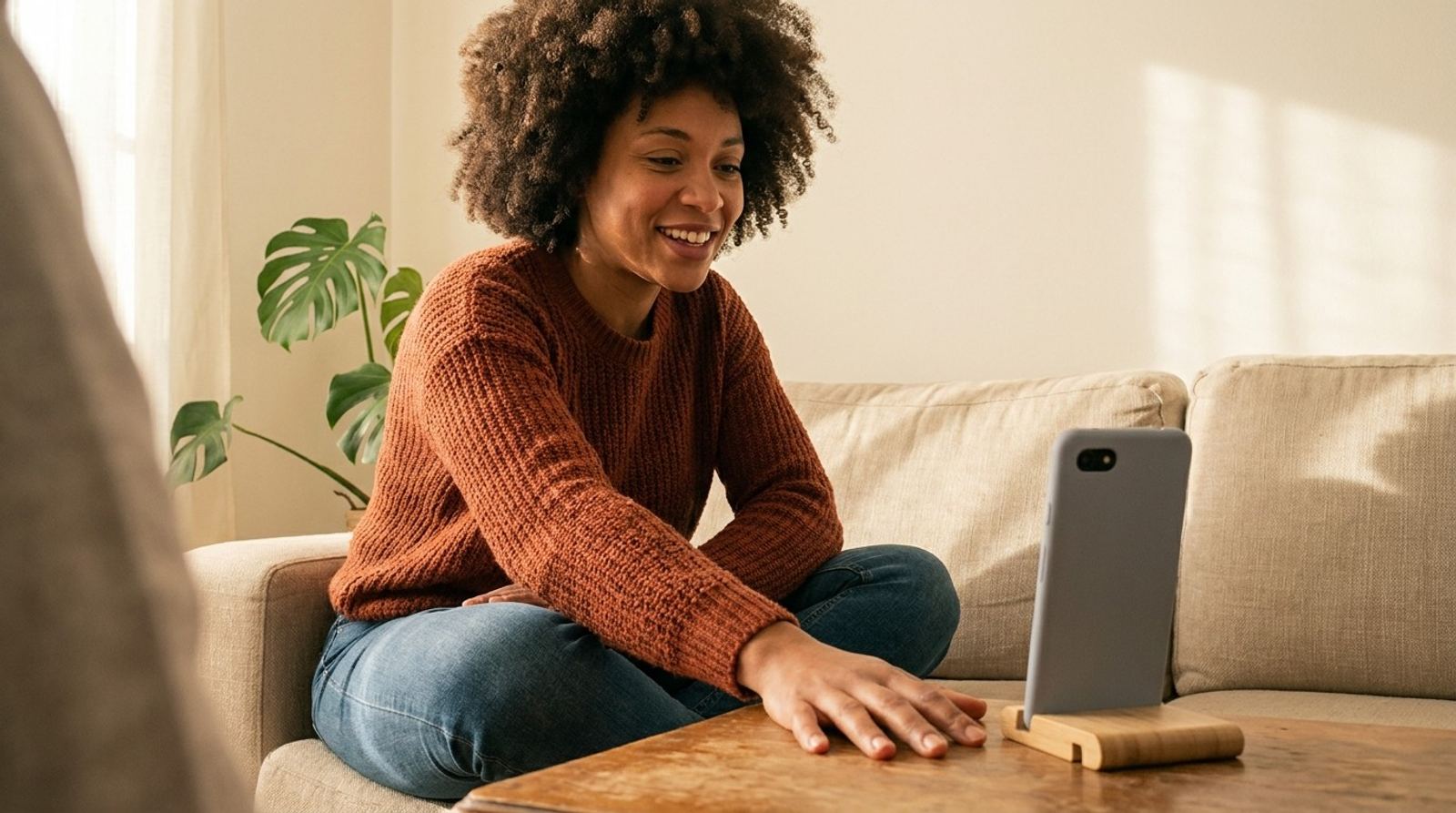
On PalVivo, that's how a first call opens: you introduce yourself to a native Spanish speaker, and they introduce themselves to you in English. The call switches language every five minutes, so you each get the same time to talk. By the third call your introduction comes out without thinking, and you can finally listen to theirs.
Before that first call, check where your Spanish stands: the test takes about two minutes, three questions answered out loud.
Introduce yourself to a Spanish speaker this week
You have the template and the follow-up questions. Now say them to a real Spanish speaker: tell PalVivo which languages you speak and want to learn, and the app finds you a partner, for free.